Those Who Got India Wrong
Churchill called India's future leaders "men of straw". The Scotsman credited the Raj with a peace India had never known. Eighty years later, the doomsayers read like historical artefacts.
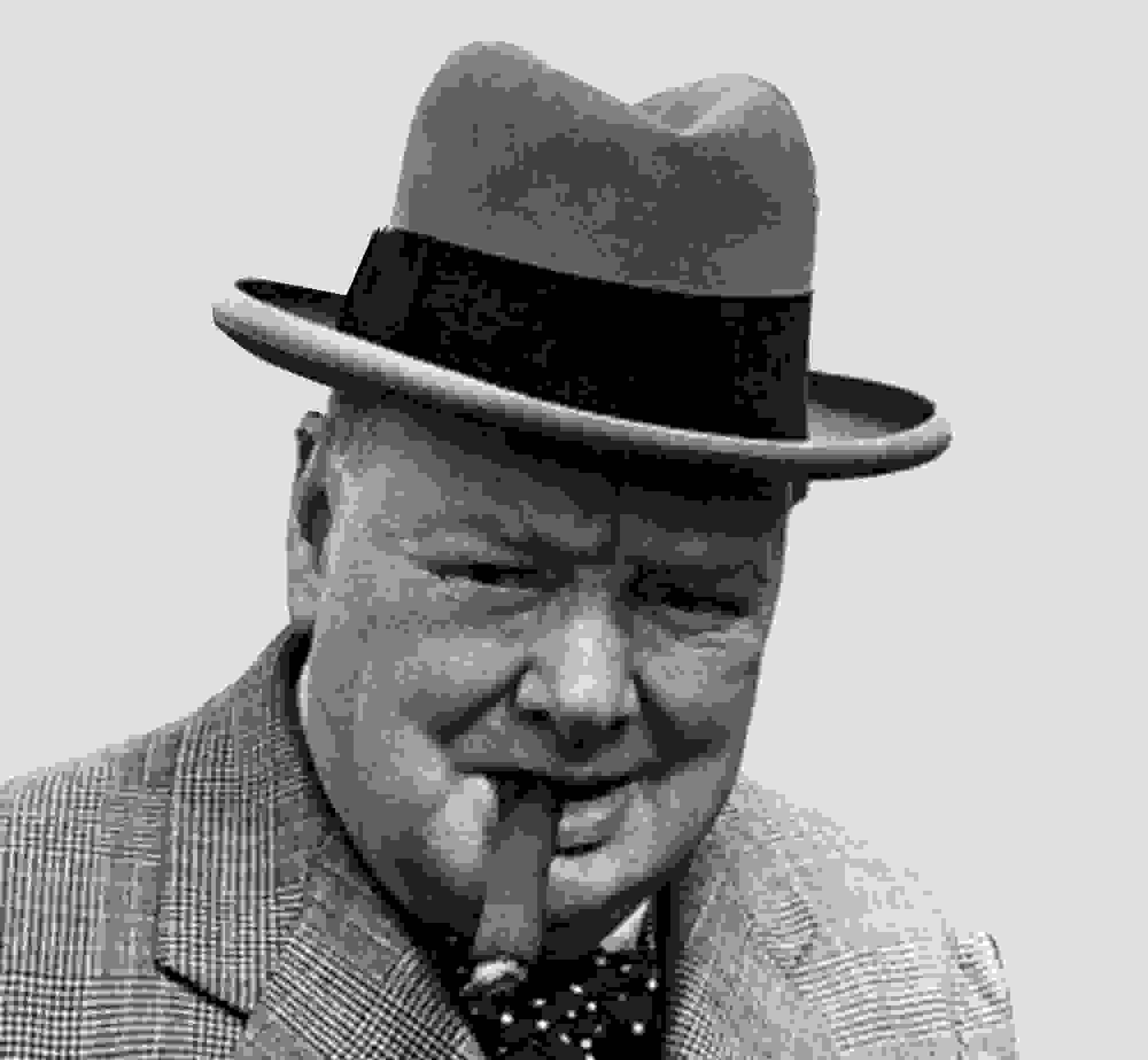
Colonial leaders predicted India would collapse into disunity, failed democracy and poverty. Eighty years later, India stands united, democratic and globally influential — proving those dire forecasts spectacularly wrong.
“"In handing over the Government of India to these so-called political classes, we are handing over to men of straw, of whom, in a few years, no trace will remain." — Winston Churchill, March 1947”
When Winston Churchill uttered those words in the final months of the British Raj, he was not alone in believing that India's independence would end in failure. Across Britain, politicians, colonial administrators and newspapers painted a bleak picture of the country's future. To them, India was too vast, too poor, too divided and too backward to survive without imperial rule. Independence, they believed, would mark the beginning of its collapse.
To the world, their apprehension may have seemed understandable. India inherited freedom under extraordinary circumstances. Partition displaced nearly fifteen million people and triggered one of the bloodiest episodes of mass violence in modern history. As many as 565 princely states had yet to be integrated into the Union. Literacy was abysmally low, poverty was widespread, and democratic governance on such a scale had never been attempted anywhere in the world. Yet, eighty years later, these predictions have become fascinating historical artefacts — because they were spectacularly wrong.
The doubts surrounding India's future rested on three broad assumptions: that India would never remain united, that democracy would fail in such a poor and illiterate society, and that whatever progress the country enjoyed had been created by the British and could not survive without them.
"India is not a nation; it will break apart"
Churchill dismissed India's future leaders as "men of straw", while General Claude Auchinleck, the last British Commander-in-Chief of the Indian Army, went even further: "The Sikhs may try to set up a separate regime… that will be only a start of a general decentralisation and break-up of the idea that India is a country… No one can make a nation out of a continent of many nations."
India, they believed, was merely a geographical expression held together by British authority. Once that authority disappeared, so would India. This was an extremely common colonial argument, and they believed they had convincing evidence: hundreds of princely states enjoyed varying levels of autonomy, and linguistic and religious identities were strong. European borders had been drawn and redrawn multiple times due to ethnic nationalism and, according to them, India would be no different.
Yet the first years of independence produced one of the greatest acts of political integration in modern history.
“Within months of Independence, Deputy Prime Minister and Home Minister Sardar Vallabhbhai Patel, assisted by V. P. Menon, persuaded 565 princely states to sign the Instrument of Accession and join the Indian Union.”
While most states acceded through negotiation, Junagadh was integrated following a 1948 plebiscite, and Hyderabad after Operation Polo later that year. Goa was liberated from Portuguese rule in 1961, while Sikkim formally joined the Republic after a referendum in 1975. The States Reorganisation Act of 1956 reorganised state boundaries largely along linguistic lines in response to strong regional movements. Over the decades, new states such as Haryana, Uttarakhand, Chhattisgarh and, most recently, Telangana were created peacefully through parliamentary legislation, without widespread violence or upheaval.
Today, the Republic remains the world's largest democracy. It has evolved into a nation capable of accommodating many identities without needing an "external authority".
"Democracy will never work here"
Penderel Moon, an officer of the Indian Civil Service, wrote before India's first general election: "…a future and more enlightened age will view with astonishment the absurd farce of recording the votes of millions of illiterate people."
The assumption reflected a deeply paternalistic belief that democracy was a privilege earned through education and economic prosperity, rather than a right. Independent India chose a radically different path. The Constitution granted universal adult franchise from the very beginning. Every adult Indian, irrespective of caste, gender, wealth or literacy, received an equal vote.
The first general election of 1951–52 became the largest democratic exercise ever attempted. Election officials travelled across mountains, forests, deserts and islands to establish polling stations. Ballot papers carried symbols so that even those unable to read could identify candidates. The election succeeded. Then another followed. And another.
Today, India has conducted eighteen general elections and countless state and local elections. Governments have changed peacefully through the ballot box. Coalition politics has become routine. The Election Commission oversees an electorate of nearly a billion voters, making India's elections the largest democratic exercise on Earth. Democracy has become the glue that holds together an immensely diverse society.
Doomsday quotes about India's independence
| Source | What they said |
|---|---|
| Winston Churchill, March 1947 | "In handing over the Government of India to these so-called political classes, we are handing over to men of straw, of whom, in a few years, no trace will remain." |
| General Claude Auchinleck | "The Punjabi is as different from a Madrassi as a Scot is from an Italian… No one can make a nation out of a continent of many nations." |
| Penderel Moon, ICS | "…a future and more enlightened age will view with astonishment the absurd farce of recording the votes of millions of illiterate people." |
| The New York Times, June 1947 | "…a first-class constitutional crisis is already convulsing India and, unfortunately, it has serious international implications." |
| The Scotsman, 14 Aug 1947 | "British rule had brought to India… a unity and peace they had never before known." |
| The Globe and Mail, 15 Aug 1947 | "These British officials and soldiers were friends and servants of India, devoted to India's protection and progress." |
"Without Britain, India cannot progress"
Even as Britain prepared to leave, many sought to portray colonial rule as India's greatest gift. On the eve of independence, The Scotsman declared: "British rule had brought to India… a unity and peace they had never before known." The Globe and Mail praised British officials as "friends and servants of India", while Churchill argued that British governance had elevated India to levels of civilisation and progress that Indians could never have achieved on their own.
Independent India inherited poverty, food shortages, communal riots and a fragile economy. The Green Revolution, initiated in 1965, transformed the country by the 1970s from one dependent on grain imports into one that was largely food-secure. The White Revolution made India the world's largest producer of milk. Institutions such as the IITs, AIIMS and ISRO laid the foundations for scientific and technological advancement and helped build a modern knowledge economy.
The economic reforms of 1991 dismantled the Licence Raj, opened India's markets to global investment, and transformed cities like Bengaluru and Hyderabad into internationally recognised hubs of information technology, innovation and entrepreneurship.
In recent years, digital innovations such as UPI, the success of Chandrayaan-3, India's role as the "pharmacy of the world", and its leadership in the International Solar Alliance have reinforced the country's position as an emerging global power. Today, India is the world's sixth-largest economy, a recognised space power, one of the largest digital consumer markets, and an increasingly influential voice in global affairs.
None of this suggests that India is without challenges. Poverty, inequality, environmental degradation, communalism and various social divisions remain pressing concerns. But no observer can seriously argue that independent India has been incapable of charting its own course.
“The British underestimated the very force that had won India its freedom: the belief that a nation could be built not upon sameness, but upon a common commitment to democracy and constitutional values.”
Galaxia Quest wishes you a happy 80th Independence Day. May our tricolour always fly high, uniting every heart in pride, freedom and hope.