Shared Freedom, Different Journeys
India is not alone on August 15. Bahrain, the Republic of the Congo and both Koreas mark the same date — four very different routes to the same human demand for self-determination.
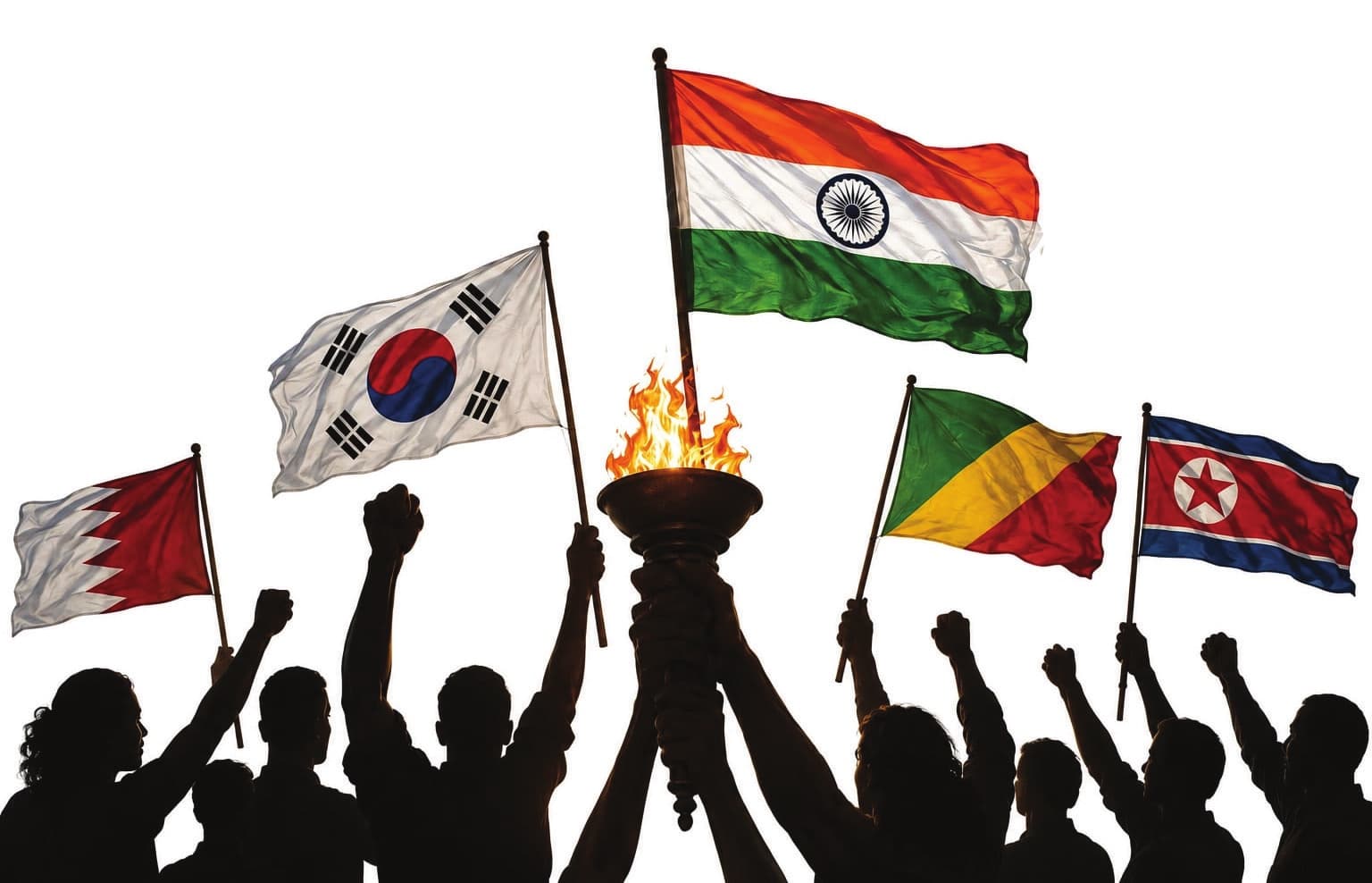
August 15 unites diverse journeys to freedom. While India celebrates independence, Bahrain marks peaceful sovereignty, the Republic of the Congo honours African decolonisation, and both Koreas commemorate liberation from colonial rule — each reflecting the universal human aspiration for self-determination.
When Indians think of August 15, the mind instinctively turns to 1947 — the midnight hour, Jawaharlal Nehru's stirring "Tryst with Destiny" speech, the unfurling of the tricolour, and the birth of the world's largest democracy. Yet India is not alone in attaching historic significance to this date. Across Asia, Africa and the Middle East, August 15 marks independence, liberation or the end of colonial rule for several nations. While their journeys differed in circumstance, scale and outcome, each reflects a universal aspiration: the right of a people to shape their own destiny.
Bahrain (1971): a peaceful farewell to empire
Bahrain's path to independence was markedly different from many anti-colonial struggles. For more than a century, the Gulf island functioned as a British protectorate. While local rulers managed internal affairs, Britain controlled defence and foreign relations.
As Britain began withdrawing its military presence "East of Suez" in the late 1960s, Bahrain's future became a subject of international attention, particularly because Iran asserted claims over the islands. A United Nations survey, however, revealed overwhelming support among Bahrainis for full independence. On August 15, 1971, Bahrain formally ended British protection and emerged as a sovereign nation. The transition was led by Sheikh Isa bin Salman Al Khalifa, who became the first Emir of independent Bahrain.
Freedom enabled Bahrain to pursue its own economic vision. Building on its early oil wealth, the country diversified into banking, aluminium production, shipping and financial services, eventually becoming one of the Gulf's major commercial centres. Independence also strengthened efforts to preserve Bahrain's Arab heritage, maritime traditions and centuries-old pearling culture.
Republic of the Congo (1960): part of Africa's great decolonisation
August 15, 1960 marked the independence of the Republic of the Congo from France during the sweeping wave of African decolonisation that transformed the continent in the post-war era. Under French rule, the territory had long supplied raw materials and labour to the colonial economy. Growing demands for political representation and self-government eventually forced constitutional reforms and negotiations.
Unlike some neighbouring territories that experienced prolonged armed struggles, Congo's transition was comparatively peaceful, though political tensions remained significant. Fulbert Youlou, a charismatic Catholic priest-turned-politician, became the nation's first president and a leading symbol of independence.
Sovereignty gave Congo control over its rich natural resources, including oil, timber and minerals. It also encouraged a cultural renaissance, allowing indigenous traditions, languages, music and literature to flourish. Today, Congolese rumba and the country's vibrant artistic heritage remain enduring expressions of national identity.
North Korea (1945): liberation and a different path
North Korea also commemorates August 15, 1945 as Liberation Day, marking the end of Japanese colonial rule. While both Koreas share this historical milestone, their subsequent trajectories diverged dramatically.
In North Korea's official narrative, the anti-Japanese resistance occupies a central place. Kim Il Sung, who fought as a guerrilla leader in Manchuria, emerged as the dominant figure in the country's founding story. Soviet forces entered northern Korea during the final phase of the war and played a crucial role in ending Japanese control and facilitating the establishment of a separate socialist state in 1948. For North Korea, liberation symbolised the recovery of national sovereignty and cultural identity after decades of foreign domination.
South Korea (1945): liberation and renewal
In South Korea, August 15 is celebrated as Gwangbokjeol — National Liberation Day. It commemorates Japan's surrender at the end of the Second World War in 1945, bringing to an end 35 years of Japanese colonial rule over Korea.
The Korean struggle for freedom took many forms. Resistance movements operated underground within Korea, guerrilla fighters battled Japanese forces in neighbouring regions, and an exiled Provisional Government worked from Shanghai. Among its most respected leaders was Kim Gu, who became a powerful symbol of Korean nationalism.
Liberation allowed Koreans to reclaim their language, culture and historical identity after decades of forced assimilation. Although the peninsula was soon divided, South Korea went on to achieve one of the most remarkable economic transformations in modern history. Today its influence extends far beyond economics, with Korean cinema, technology, cuisine and K-pop enjoying global prominence.
One date, many histories
August 15 is therefore much more than India's Independence Day. In Bahrain it marks a negotiated and peaceful exit from empire. In the Republic of the Congo it represents the great wave of African decolonisation. Across the Korean peninsula it commemorates liberation from colonial occupation and the rebirth of a nation.
“The stories are vastly different. Yet all share a common thread — the enduring human desire for self-determination.”
Some achieved freedom through negotiation, others through decades of resistance; some prospered rapidly, while others faced political upheaval and division. Every year, as India celebrates its independence, August 15 also serves as a reminder that the quest for freedom was a global phenomenon. Across continents and cultures, it remains a date that honours the triumph of national aspirations over colonial rule and foreign domination.