The Longevity Revolution: Why 100 May Become the New 80
Turning sixty once carried a quiet social instruction: slow down, step aside. That script is being torn up — and the difference between lifespan and healthspan is where the real work lies.
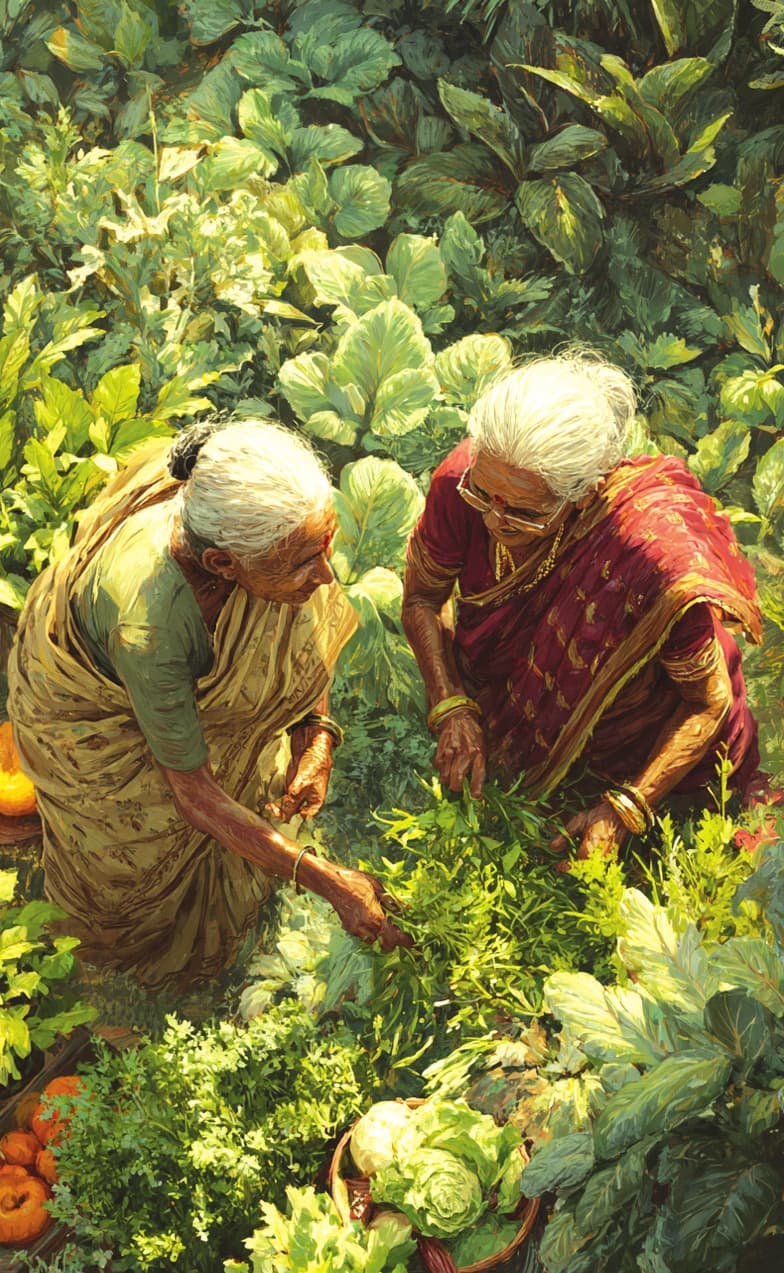
Humanity is quietly rewriting the script of ageing. What once marked decline now signals possibility, as longer lives reshape careers, families and society itself.
There was a time, not so long ago, when turning sixty carried a quiet social instruction: slow down, step aside. The serious business of living, the assumption went, belonged to the young. Retirement was not merely a financial arrangement but an existential one — a gentle withdrawal from the forward motion of the world. Society had its scripts, and older people were expected to follow them.
That script is being torn up — and not quietly
Across the world, people are launching companies in their sixties, completing university degrees in their seventies, travelling solo in their eighties, and continuing to contribute professionally well into their nineties. These are not exceptional cases or human-interest curiosities. They are early signs of something researchers, economists and healthcare scientists now describe as the longevity revolution — a shift so fundamental that it touches every institution, every family structure and every assumption about what a human life is supposed to look like.
What makes this revolution unusual is that it has no single cause, no founding manifesto and no moment of origin. It accumulated quietly over a century through vaccines and antibiotics, improved sanitation and nutrition, advances in surgical techniques and earlier diagnosis. In 1900, life expectancy in most parts of the world was strikingly low. The twentieth century changed all of that faster than any previous era in human history. We added decades to the average human life, and we did it so gradually that we barely stopped to reckon with what it would mean.
| Global longevity | Figure |
|---|---|
| Global life expectancy in 1900 | 32 years |
| Global life expectancy today | 73 years |
| People aged 100+ worldwide | over 700,000 |
| By 2050, one in six people globally will be over | 65 |
| Senior citizens in India today | over 150 million |
| Projected senior citizens in India by 2050 | over 300 million |
The 100-year life
The phrase increasingly used by researchers is the "100-Year Life". It does not mean every person born today will become a centenarian. It means that reaching such an age is becoming meaningfully plausible rather than the statistical anomaly it once was. Children born today may routinely outlive their grandparents by margins that strain the imagination.
And that changes everything — not just healthcare and pension systems, but the very architecture of a life. When does education end? When does a career begin, pause or begin again? When, if ever, does retirement make sense? These are not abstract policy questions. They are deeply personal ones, and the answers are still being written.
Lifespan versus healthspan
At the heart of longevity science lies a distinction that sounds simple but carries enormous weight: the difference between lifespan and healthspan. Lifespan is simply duration — how many years a person lives. Healthspan is something richer and more difficult to achieve: how many of those years are spent healthy, active, independent and genuinely alive in the fullest sense of the word.
“The goal of the longevity revolution, at its most honest, is not merely to help people die old. It is to help them live well for as long as possible before they do.”
What scientists have learned about ageing is both humbling and encouraging. The body ages in complex, interlocking ways. Cells accumulate damage, chronic inflammation rises, muscle mass declines, bones thin, and recovery from illness and injury slows. None of this is entirely preventable. But ageing, researchers now understand, is not completely predetermined either. Genetics matters, but perhaps less than many people assume. Lifestyle, sustained over decades, exerts a surprisingly powerful influence on how and how quickly the body ages.
What the Blue Zones actually show
In certain regions of the world, researchers have found clusters of people who routinely reach their nineties and beyond with remarkable vitality. The patterns they share are not glamorous. They remain physically active through daily life rather than relying solely on structured exercise. They eat diets built around plants and whole foods. They maintain deep, durable relationships with family and community. And they possess a sense of purpose — a reason to get up each morning that extends beyond themselves.
| Blue Zone | Country |
|---|---|
| Okinawa | Japan |
| Sardinia | Italy |
| Ikaria | Greece |
| Nicoya Peninsula | Costa Rica |
| Loma Linda | California, USA |
Longevity, it turns out, may owe less to extraordinary medical intervention than to ordinary human habits practised consistently across a lifetime: walk daily, eat more plants, maintain muscle strength, sleep seven to eight hours, avoid smoking, limit alcohol, stay socially connected, and keep learning.
Technology and the longevity economy
Technology is entering this picture in ways that would have seemed like science fiction only a generation ago. Wearable devices now track heart rate, sleep quality and activity levels in real time. Telemedicine allows people in remote areas to consult specialists without leaving home. Artificial intelligence is increasingly being applied to diagnostic imaging and disease prediction, with results that in some fields are beginning to rival or even exceed human accuracy. Digital platforms are also helping older adults remain connected, addressing one of the quieter crises of ageing: isolation.
The economic dimensions are equally significant. Longer lives mean longer spending lives, and the so-called longevity economy — built around the needs and aspirations of older consumers — is enormous and growing. Healthcare, travel, housing, financial services, wellness and education are all adapting. Businesses are recognising, sometimes slowly, that the world's fastest-growing demographic is also among its most financially capable.
But longer lives also bring genuine financial strain. A retirement lasting twenty-five or thirty years presents challenges previous generations never had to confront. The financial architecture of the twentieth century was not built for this reality, and much of it will need rebuilding. Yesterday: retire at 60, stop working, depend on savings. Tomorrow: multiple careers, flexible work, lifelong learning, active ageing.
The finding that lingers longest
Perhaps the finding from longevity research that lingers longest concerns purpose. Across studies, cultures and methodologies, the same pattern appears. People who feel needed, who maintain meaningful relationships and who remain connected to something larger than their own daily concerns tend to live longer and healthier lives. This is not a soft or sentimental observation. Increasingly, it appears to be biological. Human beings seem to be wired to thrive when they feel that their presence matters.
Ultimately, the longevity revolution asks something more difficult than taking a supplement or purchasing a fitness tracker. It asks us to revise our most basic assumptions about time, age and what a life is for. For centuries we organised existence into neat chapters: youth, work and decline. That model no longer fits the reality of how long people are living — or how well they are living.
“Age is becoming less a marker of what lies behind a person and more a measure of what remains possible.”
The twentieth century gave humanity longer lives. The work of the twenty-first century is to understand what to do with them. A world in which health, connection, purpose and dignity extend deep into old age is not inevitable. It requires intention from individuals, families, institutions and governments alike. But for the first time in human history, it is genuinely within reach.
The future may belong not only to the young but also to those who have learned, over a long life, how to keep becoming.