Painting the Invisible: The Language of Kalicharan Gupta
Kalicharan Gupta's abstractions are meditative landscapes of memory, emotion, and consciousness. Rooted in Indian modernism, his canvases chart the invisible terrain between matter and spirit.
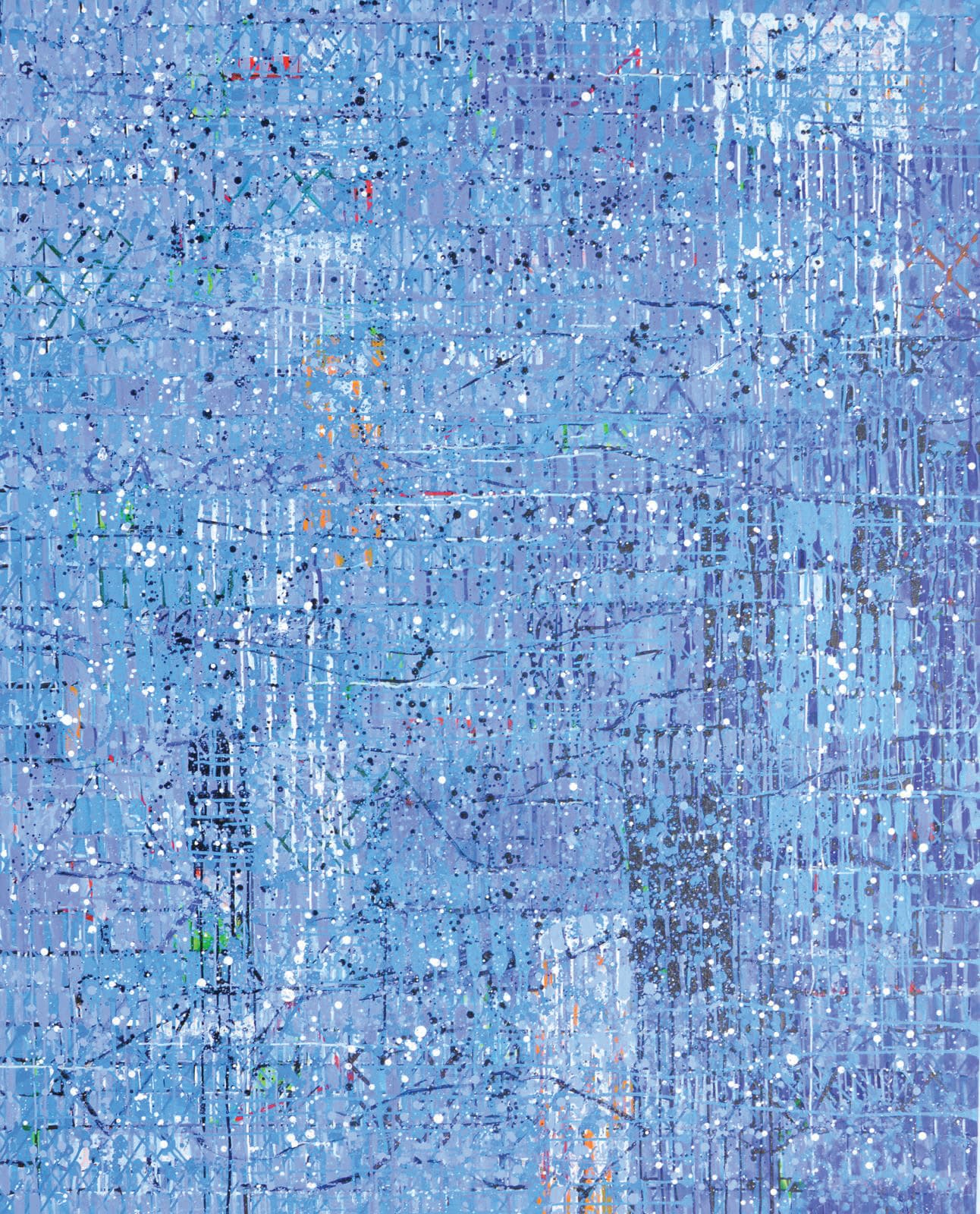
Cartographies of Consciousness: Kalicharan Gupta and the enduring value of inner landscapes. The history of abstract art is, in many ways, the history of humanity's attempt to picture what cannot be seen.
“Kalicharan Gupta's abstractions are meditative landscapes of memory, emotion, and consciousness. Rooted in the rich tradition of Indian modernism, his paintings balance luminous colour, layered texture, and spiritual depth to create works that reveal new meanings over time. For discerning collectors, Gupta offers more than visual impact—he offers art of enduring resonance and lasting significance.”
In the early twentieth century, artists such as Wassily Kandinsky, Kazimir Malevich, and Piet Mondrian began to move away from the depiction of the external world. They believed that color, line, and form could communicate emotional and spiritual realities more powerfully than literal representation. Abstraction was not conceived as a rejection of reality, but as a deeper engagement with it; an attempt to reveal the invisible structures of thought, feeling, and consciousness.
This pursuit resonated profoundly in India, where philosophical traditions have long explored the relationship between the material and the transcendental. From Tantric diagrams and mandalas to temple architecture and miniature painting, Indian art has consistently sought to visualize forces that exist beyond ordinary perception. In the twentieth century, artists such as V. S. Gaitonde, S. H. Raza, Ram Kumar, and Nasreen Mohamedi transformed these philosophical concerns into a distinctly Indian modernism that now occupies a central place in global art history.
It is within this rich lineage that the work of Kalicharan Gupta finds its most meaningful context.
There are paintings that invite admiration, and there are paintings that invite immersion.
Kalicharan Gupta's abstractions belong decisively to the latter category. They do not present a recognizable scene or fixed narrative. Instead, they unfold slowly, like a memory resurfacing or a thought taking form. Layers of color, texture, and gesture create compositions that feel simultaneously intimate and expansive, works that reward contemplation and reveal their complexity over time.
To stand before a Kalicharan Gupta canvas is to enter an interior landscape where emotion, intuition, and spiritual reflection converge.
Painting the Invisible
The most compelling abstract paintings operate as visual meditations. Their purpose is not to describe the world but to evoke states of being that resist verbal explanation.
Gupta's work embodies this principle with remarkable clarity. His canvases suggest traces of geological formations, cosmic energies, and submerged memories. Yet they remain open-ended, allowing each viewer to bring personal associations to the encounter.
This ambiguity is not uncertainty; it is a deliberate and sophisticated artistic strategy. By withholding literal reference, Gupta creates space for introspection.
The Language of Kalicharan Gupta
What distinguishes Gupta's paintings is their ability to balance movement with stillness.
At first glance, the viewer is drawn to their luminous surfaces and resonant colors. With sustained looking, intricate structures begin to emerge, forms that seem to oscillate between landscape, symbol, and pure abstraction.
His visual language is characterized by richly layered textures, vibrant yet harmonized palettes, gestural brushwork, and a contemplative sense of rhythm. These elements combine to produce works that feel both spontaneous and deeply resolved.
Each painting functions as a cartography of consciousness, tracing the subtle terrain between memory and imagination, matter and spirit.
A Work That Deepens with Time
One of the defining qualities of Gupta's paintings is their capacity to evolve in the eyes of the viewer. Unlike images that offer immediate gratification, these works reveal themselves gradually. New details, emotional tones, and symbolic associations emerge with repeated engagement. This sustained dialogue between artwork and viewer is one of the clearest indicators of artistic significance.
Such works become more than objects of display; they become enduring companions in a collector's environment, contributing intellectual and emotional depth to the spaces they inhabit.
Indian Abstraction and Global Recognition
Over the past two decades, Indian abstraction has gained increasing international recognition. Museum exhibitions, scholarly research, and strong market performance have reaffirmed the importance of Indian modernism within the broader narrative of twentieth- and twenty-first-century art.
This renewed attention has also encouraged collectors to look beyond a small circle of canonical names and engage with artists whose practices are mature, distinctive, and historically grounded. Kalicharan Gupta belongs to this important group.
His work speaks to universal themes of consciousness, transformation, and the search for meaning; concerns that transcend geography and cultural context.
Why Kalicharan Gupta Matters to Collectors
Collectors are drawn to Gupta's paintings for reasons that extend well beyond visual appeal.
His oeuvre reflects decades of disciplined practice and a consistently evolving artistic language. The work carries philosophical depth while maintaining strong formal integrity. It possesses a commanding presence in contemporary interiors, yet its greatest strength lies in its ability to sustain thoughtful engagement over time.
Equally significant is the relative rarity of important works, many of which already reside in private collections. For discerning collectors, this combination of authenticity, maturity, and scarcity makes Gupta's paintings particularly compelling.
Collecting with Perspective
The most meaningful acquisitions are those grounded in artistic integrity and cultural relevance.
Kalicharan Gupta's paintings offer both. They are rooted in a profound engagement with abstraction as a language of inner experience, and they occupy a significant position within the evolving narrative of Indian contemporary art.
For collectors who seek works of lasting resonance, Gupta represents an artist whose significance extends beyond immediate visibility. His paintings reward patience, scholarship, and emotional openness.
Living with the Work
A Kalicharan Gupta painting transforms the atmosphere of a space.
It introduces a sense of stillness, contemplation, and subtle energy. Over time, its layered surfaces continue to reveal new nuances, ensuring that the relationship between artwork and viewer remains dynamic rather than static.
This enduring capacity for discovery is what distinguishes important art from merely decorative art.
Conclusion
Kalicharan Gupta occupies a distinctive and meaningful place within the tradition of Indian abstraction. His paintings unite formal sophistication with spiritual depth, creating works that are visually compelling and intellectually expansive. To collect a Kalicharan Gupta is to engage with a body of work that charts the invisible landscapes of consciousness.
These are paintings that do more than inhabit a wall. They invite reflection, reward sustained attention, and continue to reveal new dimensions of meaning, offering not only aesthetic richness, but a lasting connection to the deeper currents of human experience.