The Voice That Named Itself: Gauhar Jaan
Calcutta, November 1902. Three minutes to compress years of training into wax, and then four words that changed Indian music: "My name is Gauhar Jaan."
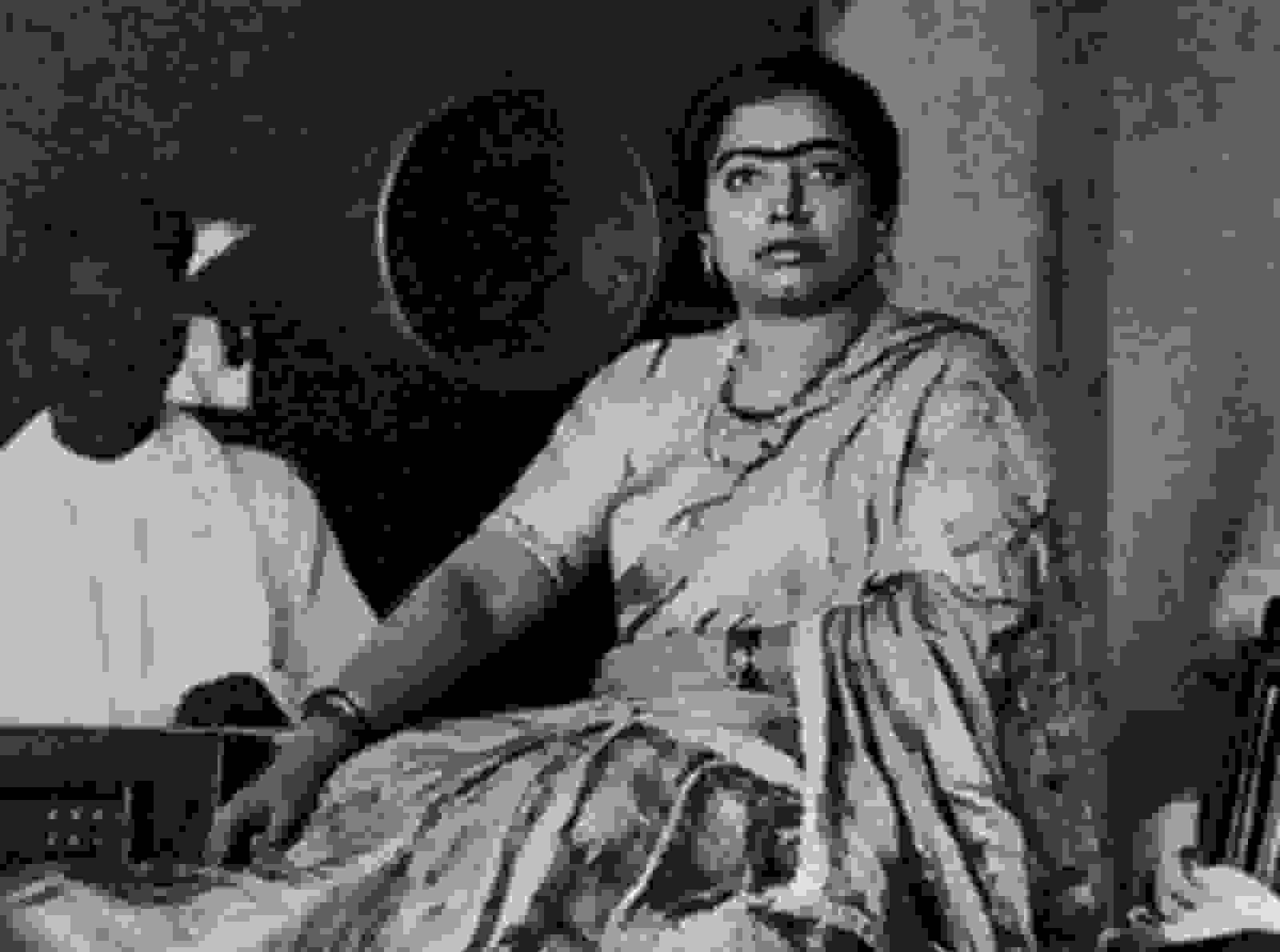
Gifted with extraordinary talent, fearless ambition and remarkable adaptability, Gauhar Jaan transformed Indian classical music for a new technological age, becoming the pioneering voice that introduced India to recorded sound.
A woman stands before an enormous recording horn in a makeshift studio in Calcutta in November 1902. There are no microphones, no headphones, no second takes. She has barely three minutes to compress years of musical training into a single performance. When she finishes, she turns towards the recording engineer and says calmly: "My name is Gauhar Jaan."
Four simple words. More than a century later, they remain among the most famous ever spoken in the history of Indian music.
Today we live surrounded by recorded sound. Music streams instantly across continents, preserved forever in digital archives. It is easy to forget that there was once a time when every musical performance disappeared the moment the last note faded. Until the late nineteenth century, music existed only in memory. The gramophone changed that forever, and in India no one embraced the new technology more brilliantly than Gauhar Jaan.
Angelina Yeoward becomes Gauhar Jaan
Born Angelina Yeoward in 1873 to an Armenian-English father and an Indian mother of Kashmiri descent, she was later renamed Gauhar Jaan after her mother converted to Islam and entered the world of the tawaif. Colonial stereotypes often misunderstood these women, but in their own time they were among India's finest musicians, dancers and poets. They preserved classical traditions, trained aristocrats in etiquette and aesthetics, and were celebrated patrons of the arts.
Growing up in Benares and later Calcutta, Gauhar absorbed music with extraordinary ease. She mastered thumri, dadra, kajri, khayal, bhajans and several regional forms. By the turn of the twentieth century she was already a celebrated performer, entertaining royalty, commanding remarkable fees and living with a degree of financial independence unusual for women of her era.
Then came the gramophone
In 1902 the Gramophone Company sent a young American recording engineer, Fred Gaisberg, to India in search of voices worth preserving. He found a country overflowing with musical traditions but almost entirely dependent on oral transmission. Magnificent performances filled courts and private gatherings, yet vanished as soon as they ended. Recording offered the possibility of permanence. Among all the artists he encountered, Gauhar Jaan stood apart.
Yet the new technology demanded something no concert audience ever had. A Hindustani classical performance unfolded slowly. A raga could develop over an hour or more, revealing its emotional depth through patient exploration. The wax recording disc allowed barely three minutes. For many musicians, this was an impossible limitation. For Gauhar, it became an artistic challenge.
“Rather than merely shortening her performances, she reimagined them — identifying the emotional heart of a composition and building her recording around it.”
In doing so, she helped create a new performance style — one designed not for a royal court or intimate mehfil, but for the gramophone. It was an extraordinary act of adaptation. Instead of resisting innovation, she shaped it.
The signature
At the end of every recording came the phrase that would become legendary: "My name is Gauhar Jaan." The declaration had a practical purpose. The wax masters travelled to Europe for processing, and technicians there needed to know whose performance they were hearing. Her spoken signature ensured the correct label appeared on the finished record.
But the sentence came to mean far more than simple identification. In an age when many women, especially those from the tawaif tradition, were denied public recognition, Gauhar ended every performance by claiming ownership of her own voice. She did not fade anonymously into history. She announced herself with confidence, ensuring that future generations would know exactly who they were listening to.
Music becomes portable
The records spread rapidly across India. For the first time, classical and semi-classical music travelled beyond princely courts and elite salons into ordinary homes. Listeners who might never attend a live mehfil could experience great music whenever they wished. Something of the magic of live performance was inevitably lost, but something equally remarkable was gained: music became portable, repeatable and accessible in ways previous generations could scarcely have imagined.
Over the next two decades she recorded more than 600 songs in multiple languages, including Hindustani, Bengali, Gujarati, Marathi, Tamil, Persian, Pashto and Arabic. Her remarkable versatility reflected the rich cultural landscape of the subcontinent and demonstrated that recording technology could embrace diversity rather than diminish it.
Perhaps her greatest contribution, however, was psychological. Many traditional musicians initially viewed recording with suspicion, fearing it would cheapen or distort their art. Gauhar proved the opposite. She showed that a new medium did not have to replace tradition; it could preserve it, expand its audience and give it new life. That lesson shaped the future of Indian music.
The fading, and the return
The great recording artists who followed — from the pioneers of the gramophone era to the playback singers of Indian cinema — worked within a world that Gauhar had helped create. Every singer who learned to perform for a recording rather than a concert hall owed something, directly or indirectly, to the path she had opened.
Like many pioneers, however, she did not remain at the centre of the world she helped build. Musical tastes changed. New technologies emerged. Younger artists captured public attention, and Gauhar's dazzling fame gradually faded. She died in Mysore in 1930, far removed from the extraordinary celebrity she had once enjoyed.
Yet history has a curious way of restoring forgotten figures. Today Gauhar Jaan is remembered not simply because she was among India's earliest recording artists, but because she understood, before almost anyone else, what recording could become. She recognised that technology was not merely a machine for preserving sound. It could create entirely new ways of experiencing music.
Listen to one of her surviving recordings today and you hear more than an old voice beneath layers of crackle and static. You hear the birth of a new relationship between artist and audience. Across more than a century, her voice still carries confidence, grace and unmistakable presence.
“Every time we tap a phone and press play, we participate in a revolution that artists like Gauhar Jaan helped begin.”
"My name is Gauhar Jaan." It was more than a signature. It was the moment Indian recorded music found its first unforgettable voice.